Showing posts with label Bangladesh. Show all posts

Thursday, May 24, 2012

A Weekend in The Burren - The Aengus Finucane Memorial Walk

Aengus Finucane Memorial Walkers 2012 
Two weekends ago the second Aengus Finucane Memorial Walk took place in The Burren in Co. Clare, organised by a committee of former Concern Bangladesh volunteers from the heady early days of Concern, back in the 70s. Aengus was one of the founding fathers of Concern in Nigeria/Biafra in 1968 and it has grown from strength to strength since. Our lives are inextricably linked to Concern since we met as volunteers in Bangladesh in 1979, and we have a great grá (love) for the NGO that was home to us for over a decade between Tanzania, Bangladesh and Laos.

Jan and me at Ailwee caves
The famous signpost the CoCo shrank!

The Bare Burren Mountains 
Hubby Jan and me were walking for the first time as we had been unable to go the previous year when it was held in Leitrim.  This year I came home from the INMO conference in Killarney a day early and this meant we were able to head for Clare on the Saturday morning, arriving in Ballyvaughan in plenty of time to check into the hotel and have a snack before the walk. We also met some of the other walkers, friends and former colleagues in many instances. Most of the Concern family have met up over the decades at various AGMs and reunions, particularly the 40th Reunion a few years ago in 2008. It was a great weekend and it raised money for a cause close to Aengus Finucane's heart, the Jack Praeger Rescue Project in Calcutta (or Kolkata)

Tanzanian Friends Reunited in Ballyvaughan
The Poulbrone Dolmen - 5000 yrs old or so. 
Jan and me went to the pier where the meet-up was, and it was a bit drizzly at first  but this cleared up in jig time and we headed off to the walk, a gentle 5km out and 5km back the same route. We had a terrific guide who talked for Ireland and gave us a potted history of the Burren, its pots and caves and limestone history which you can read for yourself here. It's way too technical and geological for me, just know that it's the most unusual ecological and geological spot with rare unique flora that grows nowhere else in Ireland. The limestone surface is slowly being restored as trees begin to grow again, now that people are no longer collecting firewood in the hills. Seems like there's a reversal of deforestation going on in the Burren and I wonder will it change the place. The bareness is what makes it look so special, and it's very bleak in places with all the drystone walls and the dolmens or standing stones.

Windswept at the Poulnabron Dolmen
The walk was beautiful as the sun came out and we walked and talked through the path to the Ailwee Caves entrance. The caves have to wait for another day as they probably deserve a visit on their own with all the stalactites and stalagmites. We had a group photo taken at the Cave entrance. and then we walked back, with the view totally different and overlooking the sea at Ballyvaughan all the way across Galway Bay to Connemara. We chatted to various people and it was lovely to see everyone reconnecting, and meeting people we had last  met in Bangladesh over 30 years ago, or Tanzania over 25 years ago.

Limestone Burren landscape
We repaired to the pub when we got back, some of us getting ready for the night ahead first. I went for a very hot bath to prevent any possible muscle ache and it worked a treat, and then we headed out. Dinner was for 7pm in L'Arco Italian Restaurant in Ballyvaughan, across the road from the Burren Hotel where we stayed. There were some moving speeches as Jack spoke about his beloved brother Aengus, and the decision was taken to have next year's walk in Waterford - who knows, it may even be around Lismore!

We had a lovely meal and a great laugh at our table with a mix of people from Bangladesh and Tanzania days. Lots of photos were taken and promises to keep in touch, and we went back to a different pub after the meal where we continued the craic well into the night. Sign of the times and the demographic we all represented, we didn't party like back in the day when we would see in the dawn before hitting the hay, and we were all back in our hotels and hostelries between 2 and 3 am.


Hardy walkers under Bare Mountain on the Burren
One of the rare Burren flowers in bloom
The road back to Ballyvaughan
The next morning after breakfast another old Concern tradition was relived as Jack, a Holy Ghost priest like  his late brother Aengus, celebrated Mass in the conservatory of the guest house. It was a lovely personal and warm ceremony, with none of the distance and reserve that a formal church setting demands, and we all gained from it, whether religious or not. We all headed off homeward bound around lunchtime, and said our goodbyes till next year in Waterford!


Connor Pass, Dingle Peninsula, Kerry.
Jan and me took the long road home, going through the Burren and visiting the Poulnabrone Dolmen for a photo opportunity.We continued on down through Kerry after crossing the Shannon Estuary by the Killimer to Tarbert car ferry, going out to Dingle via Tralee and over the Conor Pass which has spectacular views over both sides of the Dingle Peninsula. We came  back via Killarney and Mallow, and we're still awaiting the summer that eludes us thus far.

Sunday, March 25, 2012

Currying Flavour - Beef Curry and Trimmings

Beef Curry with Rice, Dhal and all the trimmings
I've been asked to share my recipe for Beef Curry over on Facebook so I thought the best way is to post it for posterity on my blog! This way everyone can enjoy it and it'll link to Twitter and Facebook. I have a really simple approach to curries - don't be a curry snob is the starting point and then it's straightforward after that!

I lived in Bangladesh over 30 years ago for over 2 years as a young Concern volunteer and that was the start of my love affair with kari or what we know as curry. (Along with another love affair but that's a whole 'nother story!). Ireland in the '70s wouldn't have been a hotbed of exotic epicurean delights and we were just about getting used to yoghurt and pasta as fancy foreign food, so for me going to Asia and encountering Bangladeshi cuisine was a real eye-opener. I got to love the food, the lack of spuds didn't bother me too much as I adored the rice staple, either boiled or fried as Biryani, and there was the added bonus that I lost 2 stone (about 14kg) in the first three months there from a combination of amoebic dysentery and a healthier diet with lots of rice and delicious fruit.

This paradox is quite explainable as I had a steep adjustment to make in relation to building resistance to bugs in water and the environment and I'd say all us sensitive Irish nurses and teachers and engineers and agriculturalists had to cross that Rubicon! Once we got over the first nasty dose we were pretty well assured of cast-iron constitutions for the duration of our stay - which was just as well as I loved street food and lassi and just got sense, with the  maxim "boil it, peel it or forget it" as my mantra. The joys of tropical living were myriad and I've just touched the surface. Another time I'll tell you about the skin problems, the filaria risk and the general day-to-day hazards of daily life in such a challenging climate.

Curry bash at Martin's Oz send-off - a big hit with the lads!
Back to the curry. I fixed on this beef curry a few years ago and it is a big hit with everyone, family and visitors alike. I make it a day before serving as like any decent stew it benefits from standing for a day or so. Think back to your student flat days when the stew made on Monday lasted through to Thursday (or made on Sunday if you had a good Irish mammy and could do some home shopping!) The rice has to be Basmati - I use Lidl or SuperValu Basmati Rice as the cheapest and best. Again no need to be a rice snob either.

Perfect Beef Curry

Ingredients
  • 2lbs/1kg stewing beef (with some fat marbling or trim to give it extra flavour)
  • 2 onions - slice thickly
  • Some garlic - 2-3 cloves
  • Patak's or Sharwood's sauces - I use a mix of the following with 3 tablespoons of three of the following - a combo of mild and medium. I mix the flavours quite randomly and find a combo is better than a single sauce. Totally unscientific and probably give the Patak family the vapours, but it works for me. 
  • Mild = Tikka or Tandoori or Korma; 
  • Medium = Rogan Josh, Jalfrezi or 
  • Hot = Madras, Vindaloo.
  • These last two are for the foolhardy who think they can handle hot curries. You've been warned!
  • 1 can (400g) of chopped tomatoes
  • 1 can (400g) of Coconut Milk
  • Tablespoon of Mango Chutney (optional)
  • Tablespoon of vegetable oil
  • Optional Extra: Dried spices - a teaspoon of each of the following can be fried in hot oil before adding the sauces and meat.
  • Garam Masala
  • Cumin (seeds or powder)
  • Coriander (seeds or powder)
  • Mustard seeds
 Method
  1. Put oil in heavy base saucepan - heat to smoking hot.
  2. Add dried spices if using and stir for a minute but don't burn them.
  3. Add the sauces as in 4 above.
  4. Add the meat and onions and garlic and mix well.
  5. Brown the mixture but again don't burn - turn down heat as it will stick if you're not careful.
  6. Add tomatoes and coconut milk and mix well. 
  7. Cover and turn down to simmer, stirring occasionally, for 3-4 hours. 
  8. It's done when the meat is so tender to be falling apart when you cut it. 
    Last family curry - Martin's going-to-Oz party
You could use any quality sauce you can get locally - Patak's and Sharwoods are the commonest avaiable here. I'm sure there are specialty shops where you can get any variety of sauces. I use sauce in preference to dried powder as it gives more intense flavour and they are pretty oily and infuse every pore of the meat.The secret is to add the sauce to the meat before browning it - no point in searing the meat before the flavours can permeate the fibres. There's my science bit for you.

Serve with freshly boiled Basmati Rice.

Perfect Basmati Rice.
NB: I don't do any of the things you should do with rice like washing it or soaking it.
Put 200-300gm rice in heavy base saucepan.
Cover with boiling water to about double the volume of rice - ie. if rice quarter fills the saucepan then add water to half fill the saucepan.
Add a tablespoon of vegetable oil - I use olive oil - and stir through.
Cover and bring to the boil; when rolling, stir again and turn off heat.
Leave on stovetop for 10-15 mins and steam will cook it through dry and perfect. No need for rinsing, draining or anything. Just stir to separate and serve. I use this rice for making fried rice dishes like Nasi Goreng another family favourite for midweek fast food dinners.


Side dish - Garam Masala Fried Eggplant (or Aubergine) - Brinjal
Fried Eggplant
  1. Slice eggplant.
  2. Sprinkle with Garam Masala (a blend of sweet spices - a store-cupboard essential!)
  3. Heat oil in heavy base frying pan to about 0.5cm depth to smoking
  4. Add eggplant slices and fry in hot oil, turning after a few minutes.
  5. When golden brown on both sides remove from pan and drain on kitchen paper (it's pretty oily as the eggplant absorbs a lot of the oil - don't even think about calories!)
  6. Eat with the curry - it's delicious.

Any other side dish like Raita (yogurt with thin slices of onion or cucumber and sprinkled with garam masala or cumin) or sliced banana or just a green salad with chunky beefy tomatoes. Chappatis or Parathas are also delicious Indian Flatbreads to serve with curry and they are the mopper-uppers of the juices as curry is best eaten with no cutlery but with the fingers. Try it sometime - have a bowl of hot water with a slice of lemon on hand to cleanse your hand afterwards.

Enjoy! Ask me anything I didn't explain properly and I'll try to help.


Wednesday, December 29, 2010

Reflections on Water - Past and Present

Our Lifeline for the past few weeks
At last - the water is back albeit at reduced pressure which means no showers, but let's be thankful for small mercies as dear old Ma used to say. And the joy of having water to wash, flush, run the dishwasher and washing machine and mop the manky floors knows no bounds!

I hadn't realised how much I'd taken water for granted till spending this Christmas without it - and surviving. It's been well over 20 years ago, when we were living in Burigi in Northwest Tanzania in the heart of the bush between Lake Victoria and Rwanda, with the two oldest and the third on the way, and we had no running water at all.  We lived on rainwater (in the rainy season of course) collected in drums and a specially built tank, and river water did for the dry season and our clothes washing. Nappies were always a darker shade of grey and everything was tinged with a sludge-coloured hue. We only realised this when we were back in Ireland and saw how technicolour everyone else was compared to our au naturel shade of safari gear.

The boys on driftwood at Bahari Beach Dar-es-Salaam - looking out to Zanzibar-1994
Yes, those were the days - and we were loving it! Must have been the vigour of youth that kept us going, and the fact that we were totally thrown back on our own resourcefulness to get by. We were very stoic and nothing fazed us, even the dreaded malaria which landed hubby in our local mission hospital on a few occasions. We had to boil and filter all our drinking water, as it was very muddy from the river and the chalk filters had to be cleaned almost daily. So we certainly didn't take water for granted- and as we had a pit latrine which didn't require flushing we had no worries on that score. Not as awful as it might sound, these pit loos are a terrific solution for any area of water shortage and are a lot more environmentally friendly - as long as they're not leaching into any water supply.

I have some terrific pics of the boys at bathtime outside our house, as all ablutions took place in a makeshift shower hut, with bucket showers. They are sitting in a yellow plastic tub in the sunshine, and as happy as sandboys. I don't think they were overly traumatised by the lack of mod cons, as they knew no different, having been born and reared in the bush. But we often longed for a decent shower and a highlight of our time there was trips to the Dutch doctors in Rubya Hospital in Muleba where we could chill out and shower at length safe in the knowledge they had plenty of water and a hydroelectric plant in the making from the abundant waterfalls in that elevated region.

We had friends in Bukoba town and visiting there meant a surfeit of water, and an illicit swim in Lake Victoria which was out of bounds as far as the tropical docs in Ireland were concerned. This was due to the risks of contracting Bilharzia or Schistosomiasis, which was transmitted via the snails that lived in the water and were vectors of the disease. We occasionally took a chance, hoping that our years in the bush had given us an acquired immunity from all kinds of parasites, as the missionaries and other expats took a laid-back approach to it all.

I guess everything is relative and compared to the refugees we were living amongst and working with, our lives were very comfortable and we had that option they never had - a sanctuary back in Europe if the going got tough and security inadequate. So perspective certainly kept us going as a coping strategy - no matter how rough we thought things were, they were never as rough as the lives and experiences of the Rwandan Tutsi refugees - who are now back in their own country after a lifetime of exile in Uganda and then Tanzania. But that's a story for another day.

We were always used to boiling water abroad, as the only place we ever drank tap water was in Zanzibar, where the aquifers are deep enough to be clean. In Bangladesh water is potentially lethal as the tubewell water is naturally tainted with arsenic, This was not known in our day there 30 years ago, but has since come to light. It's particularly ironic in a country that has such a love-hate relationship with water that this should happen - after all, the Cholera hospital in Dhaka invented the Oral Rehydration solution that we're so familiar with in the West now.

We are looking down the barrel of water metering in Ireland with inevitable charges - hubby is amazed that we have free water here when every other European country seems to be charging for it - but our attitude seems to be why should we have to pay when we have an over-abundance of rain in this damp climate. I guess it's all down to the cost of treatment, which is a luxury we do take for granted, especially when the boil notices appear and ghastly things like Cryptosporidium turn up in Galway and are traced back to the water source. I hope that our mega-leaking ancient pipes here will be given priority for repairs as there seems to be as many litres leaking away per hour as we owe the IMF in Euro in the coming few years.

Monday, October 18, 2010

And the Award goes to....Me!

I'd like to thank Mimi in Dublin for giving me this versatile blogger award - it's very nice to get an accolade like this and I do appreciate it - though I have to look at what I'm supposed to do with it.

Right - just checked and I have to tell you 8 things about me.
Then I have to pass it onto some fellow-bloggers - the number seems unspecified so I'll just select some random victims but tell you why I chose them.

Here goes!

1. I have lived in three continents in my lifetime - Europe, Asia and Africa. In Europe I lived in Ireland, England and Wales, and spent long periods of time in The Netherlands with hubby's family. In Asia I spent 2 years in Bangladesh and over 2 years in Laos or Lao PDR to give it its correct title. In Africa I lived in Tanzania for 11 years over a 13 year period.

2. I met my hubby Jan in Bangladesh and he comes from The Netherlands; we got married in Ireland and have spent more of our married life abroad than in Ireland. He has lived in more countries than me as he was in the Philippines as a Dutch volunteer before we met. We have never lived in his country, only visited there many times over the past 30 years. I speak reasonable Dutch and can converse and read it easily, a proud achievement for someone who still can't speak Irish after years of schooling and working in the Gaeltacht.

3. I have four children. Two of our children were born in Tanzania, and two in Ireland. The Tanzanian birth experience was far less high-tech and more memorable for many reasons - outside the scope of this list! They are all grown up now - including teen daughter who's taller than me now! The three boys are in their twenties - 28, 25 and 23. I can't believe how the years flew by.

4. I wanted to become a nurse since I was 12 and had my appendix out in Ardkeen Hospital in Waterford. It appealed to my romantic nature and had more to do with Cherry Ames books than the reality I encountered five years later! No regrets though, it's been a career that took me to wonderful countries and opened up opportunities I might otherwise never have had. Certainly life-changing - as if I hadn't gone to Bangladesh to save the world I wouldn't have met hubby!

5. My father died two months before my third birthday. People I went to school with thought I was an only child but in reality I had a sister who died in infancy who was born two months after my father's death. So it was tough on my mother - losing her husband and a baby in the space of four months. Regular blog-readers will know how close I was to my mother all my life and how I miss her since her death in March this year. I am grateful to have had her for so long, and it's a small consolation.

6. My maternal grandfather was a master tailor and I credit those genes with my love of dressmaking and knitting and sewing. We now live in the same house he lived in and practiced his craft - and called it (in his honour) Tailor's Cottage. Any skills I have in this line I owe him. He died when I was six weeks old so I never knew him, but we have his ledgers from the late 1920s for a decade, creating a rich tapestry of social history - all his clients and their suit measurements and the cost of the work is detailed meticulously, and we have fun recognising ancestors of local people from this area.

7. I didn't go to university until I was in my forties - I trained as a nurse under the old apprenticeship system - 3 years hard labour and block study with exams at intervals and finals - and my midwifery was the old one-year practical course - thrown in at the deep end with 90 deliveries clocked up in the course of the year. So I never had to go to college - until I went to do Public Health and became a full-time UCC student for a year and had a ball!

8. I became a granny this year and am enjoying it immensely - all the clichés are true - all of the fun and none of the responsibility of parenthood. I'll become a granny again next March as Sofia will get a brother or sister so happy days ahead. It brings back all the happy memories of my own children's babyhood as I watch Sofia grow up!

So now to select the lucky recipients of this Versatile Blogger Award - and don't worry if you don't fulfil the terms & conditions - it's not a bank loan, you know! So just enjoy reading it and if you feel  moved then by all means do write 8 things about yourself you are happy to share with your readers.

1.Diane @ Adventure before Dementia - she has had a peripatetic life and writes with humour about her life and travels.

2. Rudee @ A Knitting Nurse  - she inspires me with her wonderful knitting skills and her wry take on our shared profession - just what you need in community nursing.

3. Marguerite @ Cajun Delights - she's a foodie blogger and a writer and shares her wonderfully different corner of her world with us - the music, the food, and the atmosphere of Louisiana and Cajun Country comes shining through her blog.

4. Peggy @ Organic Growing Pains - she's a terrific gardener and makes me feel guilty for not being as industrious in the garden as she is - but I live it through her endeavours. 

5.  Lilly @ Stuff I make, bake and love - her gusto for food and innovation are always entertaining and enjoyable - and she writes a funny, quirky blog well worth a visit.

6. Padraic @ Window across Dublin Bay - not merely the token man amongst women but a recent blog for me that I enjoy - plenty of food for thought, and we found some serendipitous links in our past.

That's enough bloggers to target with the award - I just hope you are all happy to receive it and carry out the task of writing 7 or 8 things - random - about yourself. I enjoyed this and hope you do too. It's not meant to be confessional, just stuff you are happy to share with the world.

Friday, May 28, 2010

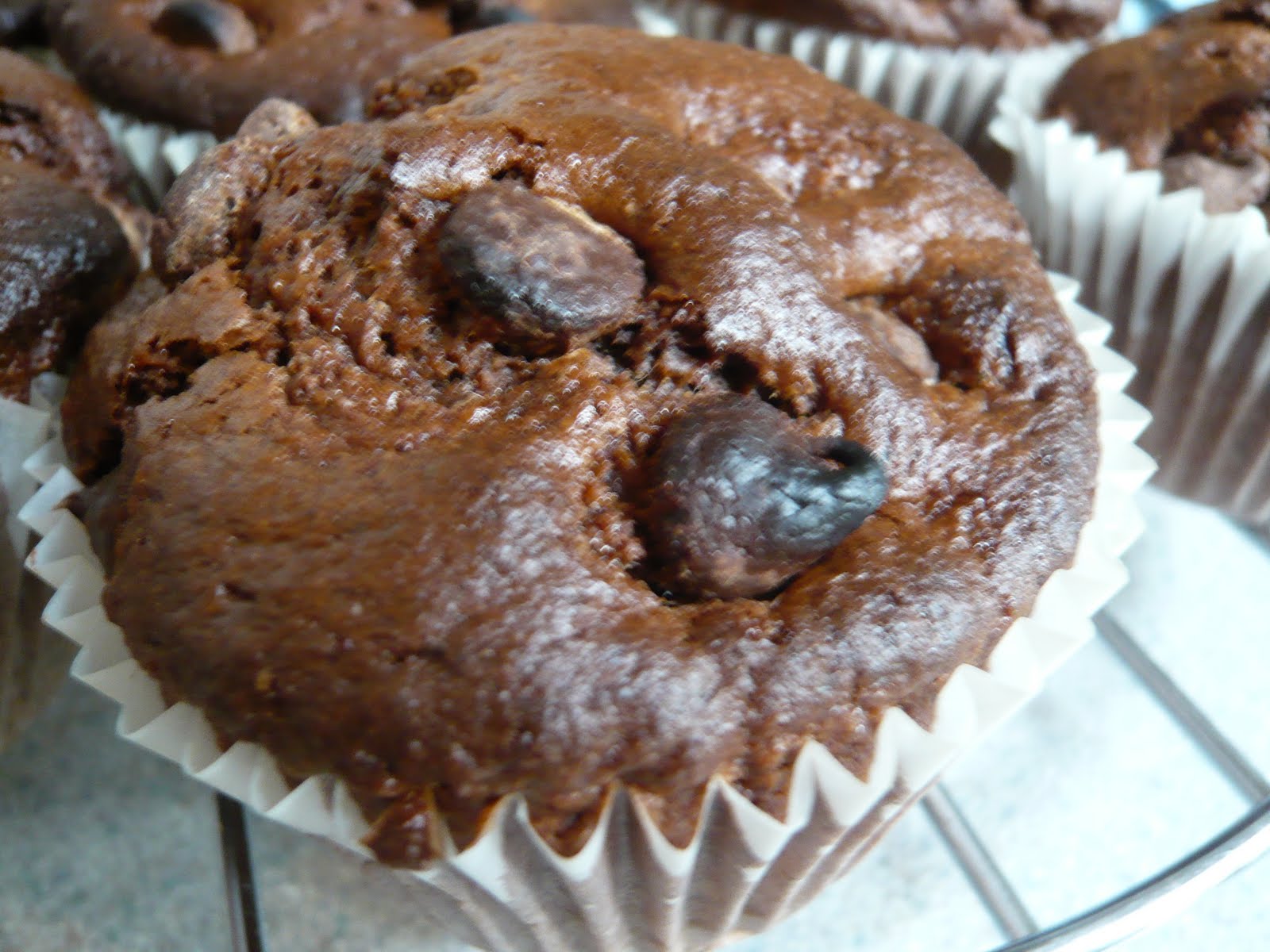
Double Chocolate Chip Muffins - why weren't exams like this in my day!

I want to share this lovely double chocolate chip recipe with you as it was the practical element of teen daughter's home economics exam in school today. She has been perfecting it over the past two days with practice runs at home, and as she isn't keen on them herself, the results have been happily consumed by visitors and given to friends. She's not under huge pressure as these are school exams, not the State Junior Cert which she'll sit next year so this is all part of the syllabus for that nerve-wracking event, the first of the two major state exams in Ireland.

Today I took a dozen of the muffins to work for colleagues to share at the tea break - and while tempting to do so I didn't pass them off as my own, but duly credited the creator. She had to bring all the ingredients to school today, and the practical exam makes up 20% of her marks in home ec. I don't know the origin of the recipe as it's a scruffy dog-eared photocopy, with no identifying title. They are very light and airy, often unusual in muffins which can be very stodgy and heavy, and they are very more-ish.

I was very lucky to get real American chocolate chips some weeks ago from a lovely patient who gets them from a friend in the States. The real thing - here all you can get are small packets that barely do a single batch of cookies or muffins. So that was a lovely gift to get, and they are dark plain chocolate looking like Hershey's Kisses - I used to get those in Bangladesh back in the late '70s when we went to movie nights at the American Center - a place I first tasted Pringles so there are a lot of firsts associated with my time in Dhaka (not least that it's where I first met hubby Jan!)

Enough reminiscing. I am still embedded with strawberries and jam making every evening - as there are about two pounds of the fruit being picked every evening, which ripen fully over the next 24 hours, I have to keep the ball rolling and there are way too many to eat or use for desserts I am making jam - this will be used on cakes and Ice cream and rice pud over the coming months as well as just plain old jam on bread! I have started the great give-away too which benefits friends and neighbours who enjoy my strawberry glut as much as I do.

Double Chocolatete Chip Muffins

Handy Tip: This quantity makes a dozen standard size muffins - use muffin cases rather than cupcake/fairy cake cases as they are slightly bigger, although the latter will do fine if you prefer smaller muffins.

Ingredients
  1. 9oz/255g self-raising flour (or plain flour with 2 teaspoons baking powder)
  2. half-teaspoon bicarbonate of soda (bread soda)
  3. half-teaspoon salt
  4. 4-6oz/110-170g white sugar
  5. 3-5 tablespoons/45-75g unsweetened cocoa powder
  6. 3oz/85g dark chocolate chips
  7. 1 egg
  8. 250ml milk
  9. 1 teaspoon vanilla essence (or use vanilla sugar*)
  10. 3oz/85g soft/melted butter
Optional - more choc chips, chopped nuts or dessicated coconut for topping

Method
  1. Preheat oven 190-200 deg. Centigrade/375-400 deg. Fahrenheit
  2. Sift together flour, cocoa, salt, soda bicarb, baking powder (if using plain flour)
  3. Add sugar
  4. Add chocolate chips
  5. Beat egg, add milk and melted butter
  6. Add vanilla essence if not using vanilla sugar
  7. Pour wet ingredients into dry and stir to combine with wooden spoon
  8. Batter should be lumpy
  9. Fill muffin cases three-quarters full
  10. Sprinkle top with chosen topping
  11. Bake for 20-25 mins until tops spring back when gently pressed
When baked, cool on wire rack

Variations on a theme

  • Cherry Chocolate - add 3-4 oz/85-110g chopped glacé cherries (yummy!) to mix
  • Hazlenut/Walnut/Brazil/Macadamia/Pecan Chocolate - add 2oz/60g chopped nuts to dry mix
  • Mocha Chocolate - add 250ml strong black coffee - cooled - instead of milk
  • Orange Chocolate - add 1 teaspoon finely grated orange rind to wet ingredients
Iced/Frosted Muffins - Mix the following for the icing/frosting
  1. 1 tablespoon (15ml) of each of the following
  2. Hot melted butter
  3. Unsweetened cocoa powder
  4. Hot water
  5. 4oz/110g icing sugar
  6. half-teaspoon vanilla essence
This icing thickens as it cools - thin with more water if needed before coating muffins

Enjoy the muffins with the essential cuppa tea and a relaxing book or favourite telly programme - I'm thinking Desperate Housewives, Gray's Anatomy, Supernanny (so you can feel smug that your kids were never that bad!) or Wife Swap (for exactly the same reasons as Supernanny, adding/substituting hubby/partner for kids!). Now you know what my late night viewing consists of, it seems that standards decline in inverse proportion to the lateness of the hour. My guilty secret, I can justify it if I'm knitting at the same time - how can it possibly be time-wasting then. And we all need down-time, so I won't make any apologies for my relaxation strategies!

The photos are a selection of the finished muffins - a little goes a long way as the chocolate is so rich. The ingredients are also pictured.

Sunday, April 4, 2010

A Thousand Splendid Suns by Khaled Hosseini - The Blogger's Book Club

Lily over at her blog has started a virtual Book Club for bloggers, and I was delighted to join up as I am a sucker for a good read and it would nicely doevtail with my real world book club. The only problem is I've got off to a very bad start as I'm running late with this review which I was supposed to have done for today Easter Sunday noon, but I just didn't get organised enough to fit it in. My excuses - the family all round for Easter weekend and working right up to 5pm on Good Friday. (So much for the perception of all public servants having a doddle of a day off on every single holiday - well not this public health nurse!)

So I won't burden you with any more excuses except to say to the other book club members in cyberspace - thanks for dropping by - if you do - and hope you all enjoyed the book too. I have no idea what format your reviews took but I figured to link to Lily's blog and the rest of the current list of Book Club members (highlighted on Lily's post here) I know about would suffice, as well as a notification to Lily on her blog as the host which is courteous at the least.


I have to confess thinking that this would be an easy book to review as I had already read it two years ago and actually have it in hardback. I bought it for our holiday to Spain when our eldest son lived there, and in the days when you could actually include books in your luggage without being charged punitive excess baggage fees for every gram the meagre 15kg allowance and before the rule of one piece of hand baggage was strictly enforced.


Back in those halcyon days my hand baggage consisted of a large African Kikapu - a woven grass basket of the sort used by the local women to bring their produce to the market and which you can buy in most Farmers' Markets in Ireland and certainly in Spanish weekly markets. Into this kikapu I would put all my books and the airport shopping of Tayto crisp 18-packs, Lyon's Tea, and Butlers or Lily O'Briens Chocolates as well as some Denny's rashers and sausages. I guess the now-strictly-enforced rules at departure have put paid to all that largesse and now I am squeezing everything into a tiny little sport bag of specified size, including my handbag and all the books have to be rationed.

In any case it wasn't that easy to review, as I had to skim it again to trigger recall, but it all came flooding back, and I remembered that I was wary of it initially as I thought it wouldn't be as good as The Kite Runner which I loved - we had read The Kite Runner for our local Book Club in Lismore and it was a firm favourite - long before the film came out - and I'd read and heard of this second book and broached it with some trepidation

It was just as harrowing if not more so in many ways. The relationships between the women Mariam and Laila are beautifully portrayed, and the attitude to women in general in Afghan society would make anyone weep. It is a brave book to detail the day-to-day lives of the rural society over a half-century of contemporary Afghanistan and it gives a great historical context to the country's woes that resonate today. I thought the violence was harrowing and wonder how women the world over can cope with such domestic brutality, and none of us can hold the moral high ground as it is pervasive in every society, so-called "civilised" Western ones as well as traditional ones - it is not peculiar to Islam or any faith, and it seems to be a part of the larger opression of women that has been entrenched in law and religion since recorded history began.

There was great love and gentleness in the book, and the maternal love's intensity was well drawn. The resilience of humanity shows through in the way people cope with living in such restricted confinement and yet that is so hard for us in the West to grasp, how women in largely female groupings like harems make life tolerable - not that I wouldn't wish it were different as the lack of choice is the key to the oppression - but I think we underestimate their strength of character at our peril.


Preconceptions go out the window I think - having lived in a traditional Islamic society which was then quite secular - Bangladesh under the martial law era of the late 70s - I witnessed first-hand how wonderfully strong the women were. They were living lives that we would surely see as appallingly oppressed and yet they were fantastically caring mothers - something that shines through in this book too -and they had a great support network of friends and family - and when given the chance were far more capable of managing their finances than would have been thought. These were the women for whom the Grameen Bank was made and who made it in turn such a success that its founder Mohammed Yunus won the Nobel Peace Prize in 2006.

I seem to have digressed all over the place in this review - apologies for that as I am trying to make the deadline before Easter Monday dawns - and I will be more vigilant in future reviews. I take a pragmatic approach to reviews in general - for our local book club we are not very formal and don't prepare written reviews, rather let an organic discussion evolve which is usually very enlightening and generates great debate and passion. I hope this Blogger's Book Club (Acronym notwithstanding!) can do likewise and thanks a lot to Lily for coming up with the idea.

The other members of the Blogger's Book Club

I will link to the other current members' blogs here: Marian at Made Marian, Treasa at Irish Mammy on the Run, Kathy at Rumble Strips, Marie at Diary of a Country Wife, Kirsty at The Road Less Travelled, Val at Magnum Lady, Jen at SmurfetteJens, Edie at Munchies and Musings, Steph at The Biopsy Report and Susan at Queen of Pots

To end - if any of my blog followers/readers who are occasional or avid bookworms would like to join up with this virtual Blogger's Bookclub - please do so, you are very welcome and just sign up with myself or go on over to Lily's blog and tell her.

Saturday, January 3, 2009

The blessings of a nice cup of tea

One of my favourite Christmas treats was a funky teapot, which has brought tea drinking to a whole new level for me. It's like a kettle, white ceramic with red flowers and black leaves.


I have gone back to drinking leaf tea after years of teabags in a mug. In defence of the much-maligned teabag, they are not too bad in Ireland, much better than in other countries I've lived in. It also set me thinking about tea in the various manifestations and its significance in my life over the years, hence this tribute.

Here is my lovely new teapot, and a mug
I grew up with tea as a constant in my life, coffee never intruding in my childhood unless you counted a vile concoction called Irel which was ersatz coffee made from chicory and must have been invented by some demented sadist in the days of wartime rationing. In any case it put me right off coffee until my student days when bedsit Maxwell House made for urban sophistication in those pre-skinny latte and cappucino days! Tea was always super-sweet until one Lent in nursing school in Dublin when I decided to give up sugar and smoking. Well, one out of two ain't bad, and I haven't gone back to sweet tea since. (The smoking cessation didn't happen for another four years and had nothing to do with Lent, but that's another story.)
In the late 1970s I worked in Bangladesh as a volunteer with the Irish-based NGO, Concern. There were the most magnificent tea gardens in Sylhet, which we visited for some of their key social events (see below!). Factory tours there showed us how the tea moved from the bush to the pot, and the process was fascinating. The tea gardens, shaded by a canopy of tall trees, possibly eucalyptus but I'm not sure, were an undulating landscape in an otherwise flat country, and this novelty value alone made them worth a visit, as did the arcane social life. The tea estates were run by remnants of the Empire, either British "Staying On" Raj types, or Anglo-Indians straight out of a Somerset Maugham novel, where full afternoon tea on the verandah was a venerable institution. The social calendar was marked by events like the Monsoon Ball and the Bachelor's Ball...which seemed totally anachronistic to me in a country that was not only post-colonial by (then) 30 years, but newly independent and in search of a strong identity.

Other tea encounters in that era were holidays in Sri Lanka to the Kandy and Adam's Peak area where there were totally different tea gardens, in misty mountainous central highlands. I can't recall the exact location of the tea estates but I remember another factory tour! And it seems the floor sweepings always ended up in teabags, which should have put me off for life, but didn't. (Maybe I have a slovenly approach to tea, and need to become a tea connoisseur/snob like so many coffee and wine "connoisseurs"!)

In those days, I eschewed the ubiquitous Chai of the entire subcontinent as being way too sweet, spicy and stewed to death, the latter being totally unforgiveable for an Irish tea drinker. (The only exception was the wonderful thirst-quenching milky chai on the trains in India, poured from a froth-inducing height into unglazed clay cups, which were thrown out of the train window afterwards - the best recycling ever.) It amuses me now to see how Chai has gained such status among tea aficionados, up there with green, white and herbal tea, and costs a fortune. Earl Gray was the height of sophistication in my younger days, and I ruined the image by adding milk!

Tanzania was our next exotic port of call, for most of the 80s and half the 90s. Another tea country, with tea gardens in the Southern Highlands as well as up North, though I only recall coffee shambas in the Arusha/Kilimanjaro/Moshi area, and in Bukoba/Kagera region. Near Iringa where we lived was a large tea estate at Mufindi, part of the gardens were nationalised and others run by Brooke Bond, part of Unilever, which was another anachronism in such a socialist country. Mufindi Club was a weekend retreat for many wazungu (expats/foreigners) and we compromised our principles somewhat by learning to play golf there on a beautiful course at over 2000m altitude. The estate was run like a company town, with a company shop for the employees where visitors to the club could buy tea from the factory. I was homeschooling our three boys back in those days and a factory tour became a mandatory field trip, where we saw every stage of production right down to - you guessed it - the teabags! Apparently not quite floor sweepings but the finest filtering of the leaves.
This is William, age 7 in Mufindi, sitting near the clubhouse by the first tee, eating peanuts -1994
Then we spent a few years in Laos, where tea was grown on the Bolovens Plateau in the far south, a place I never visited but the tea from there was large leafs, and very smoky. Very much an acquired taste which I never quite did acquire, so there was a lot of Lyon's and Barry's tea smuggled back from home; it became as coveted as Tayto Cheese'n'Onion crisps whenever visitors from Dublin came on project visits. The only "normal" tea available in Vientiane was ghastly Lipton's teabags, which had high-tech strings attached that could actually squeeze the teabag and prevent it dripping all over the floor! Never improved the taste though - a memory perhaps best forgotten!
My myriad tea gaffes are legendary and almost led to domestic diplomatic incidents back in the early 80s with Jan when visiting my future in-laws in The Netherlands. The Dutch do not drink much tea, and those that do drink it black. My persistent request for milk led to much confusion and bewilderment, and I was often given tea with "koffiemelk", which bears no relation to real milk and ruins a cuppa. Such was my desperation at one stage that I resorted to raiding the milk bulk tank on Jan's family farm to sneak in a jug of milk. I dread to think what impression they must have had of mad Irishwomen after that incident. Other cultural divides were in the presentation - a cup of tepid water with a teabag in the saucer was often proferred by friends who had the temerity to consider this constituted a cup of tea!

Apple Tart with Cream

And now we've come full circle - back to where I started tea drinking, in Lismore. There is nothing more relaxing and soothing than a nice hot cuppa at the start and end of the day, and many times in between. A nice piece of cake, a bun or a slice of apple tart with cream is an ideal accompaniment, and for breakfast it goes great with toast. The full Irish breakfast is incomplete without a pot of tea.
This rack of Almond Buns is ready to be enjoyed with a cuppa.


Culturally, Irish people are probably among the greatest consumers of tea, always milky and with or without sugar. This knows no geographical boundaries, as we are always asked to bring tea to Spain for Shayne, to keep him endlessly supplied, and the Irish community of nuns in Kabanga Hospital, where two of our sons were born, made the best pot of strong tea in Tanzania - it would bend spoons and is a lasting memory of our many visits. Not for nothing are ads for tea invariably nostalgic, with a nod to the emigrant and smacking of more than a touch of paddywhackery.
In Ireland, tea is offered to visitors as a default setting, and woe betide those who demur, as the host will appear more offended than an Irish Mammy in full-on guilt-tripping martyrdom mode! The Mrs. Doyle syndrome (see Father Ted) will then kick in and the refusenik urged to "Go on, Go on, Go on!" until he or she capitulates. Resistance is generally futile and the wise guest will do well to remember this particularly Irish tea-dance is all part of an elaborate ritual. The Irish guest expects to be cajoled and the Irish host expects the initial refusal.
I learnt this to my cost in Tanzania, when visiting a Danish friend for a playdate with our sons. She offered tea when I arrived, and I automatically said something along the lines of "Ah no, I'm grand/don't want to be putting you to any bother" - and that was it ! She said "OK, fine" and left me reeling in shock - and gasping for a cuppa! My Dutch husband could perfectly empathise with her response and from then on I never hesitated in any non-Irish situation when offered that nice cup of tea.